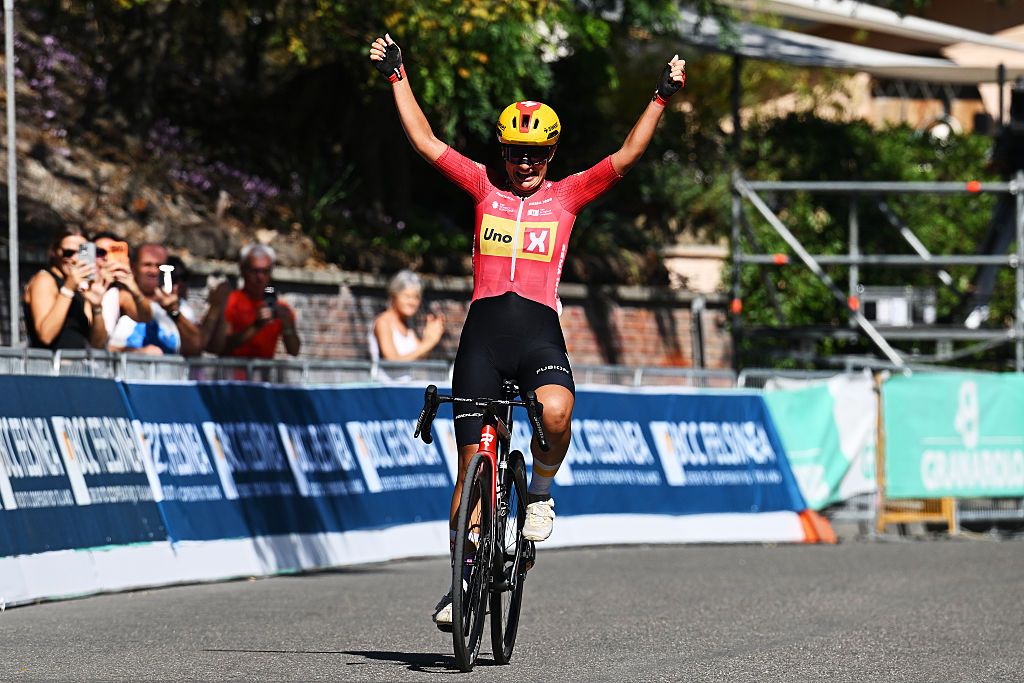
The Art of the Long Shot: What Alessia Vigilia's Bold Gamble Teaches Us About Modern Cycling
There is a specific kind of magic in professional sports that statistics can never quite capture, and it usually happens when someone decides to throw the rulebook out the window. Personally, I think we have become far too obsessed with data-driven predictability in modern athletics, which makes those rare moments of pure, unfiltered audacity all the more intoxicating. When an underdog decides to rip up the tactical script and roll the dice from miles out, it doesn't just animate a single race—it reminds us why we fell in love with sports in the first place.
Rewriting the Script on the Road
What makes Alessia Vigilia’s stunning solo victory at the Giro dell'Emilia Donne so fascinating is just how counterintuitive it was in the context of contemporary racing. In an era where every team is armed with power meters, earpieces, and hyper-calculated pacing strategies, launching a race-winning attack from deep in the distance feels almost rebellious. From my perspective, modern cycling often risks suffocating its own drama under layers of conservative, data-worshipping management. Riders are constantly told when to eat, how hard to pedal, and when it is "statistically optimal" to make a move.
Yet, Vigilia tore through that sterile playbook by springing an early breakaway and holding off a hungry peloton all the way to the line. One thing that immediately stands out to me about this performance is the sheer psychological fortitude required to execute it. When you are out there alone with dozens of kilometers left to tick down, every voice in your head—and likely your sports director's voice in your ear—is whispering that you are digging an early grave. What many people don't realize is that endurance sports are at least eighty percent mental torture once you commit to a long-range flyer. You aren't just fighting fatigue; you are fighting the crushing weight of your own doubt.
The Anatomy of a Calculated Surprise
If you take a step back and think about it, true upsets in cycling are becoming rarer because the peloton is simply too organized and too deep with talent to let someone slip away easily. When a rider like Sarah Van Dam takes second and Lauren Dickson rounds out the podium, it highlights the immense caliber of chasers who were left scrambling behind Vigilia. This wasn't a case of the pack sleeping at the wheel; it was a masterclass in exploiting a tactical vacuum.
A detail that I find especially interesting is how vulnerability can be weaponized in a race. When you attack early, you instantly shift the burden of responsibility onto the major powerhouse teams, forcing them to burn through their domestiques while you lock into a relentless, rhythmic time-trial effort. What this really suggests is that sometimes the riskiest-looking strategy is actually the safest path to victory, simply because it completely paralyzes the hesitation of the chasing group. While the favorites are looking at each other, waiting for someone else to pull, precious seconds turn into an unassailable cushion.
Beyond the Finish Line: Why Audacity Still Wins
This victory goes far beyond a simple result on a Saturday afternoon; it serves as a wonderful metaphor for how breakthroughs actually happen in any competitive field. We live in a world that constantly encourages safety, consensus, and incremental progress. Yet, history—whether in sports, art, or business—rarely remembers the people who played it safe according to the consensus guidelines.
This raises a deeper question about how we train athletes and thinkers alike. If we coach people exclusively to minimize mistakes, we inadvertently train them to miss opportunities. Vigilia’s triumphant gamble is a testament to the fact that uncertainty is where greatness lives. Ultimately, watching her cross that finish line first with a handful of seconds to spare over the charging chasers is a vivid reminder that fortune doesn't just favor the bold—it actively belongs to those who refuse to let the conventional wisdom dictate what is possible.