The Beauty of the Bounce-Back: Why a Champion's First Defeat Is Only the Beginning
When a high-profile, undefeated champion takes their first career defeat, sports fans usually panic. But in the high-stakes world of elite thoroughbred racing, a loss isn't always a tragedy—it can be a masterclass in redirection. What makes this particularly fascinating is how a single eventful race can completely reframe a horse's campaign without shattering its ultimate goals. Personally, I think we put far too much emotional weight on an undefeated record, forgetting that pressure-tested athletes often learn more from adversity than they ever do from an easy cruise in front.
Surviving the Chaos of the Track
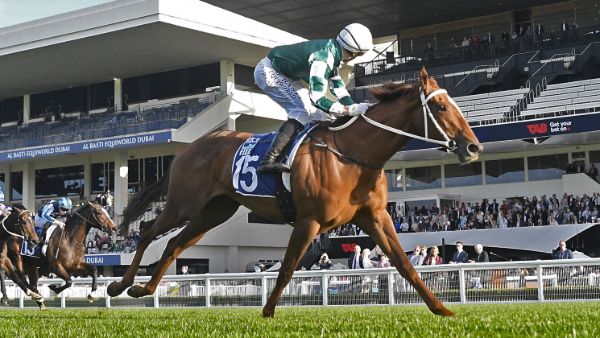
Take New Zealand’s former Horse of the Year, Well Written, who recently tasted defeat for the first time in the Group One Epsom Handicap at Randwick. Finishing sixth after an absolute nightmare of a trip—getting bumped, trapped behind a fading wall of horses, and fighting a muggy track—she wasn't just beaten by better positioning; she was fighting her own biology. What many people don't realize is that post-race physical anomalies like "the thumps" (Synchronous Diaphragmatic Flutter) are startling reminders of how intensely these animals push their physical limits. Trainer Stephen Marsh noted she bounced back within half an hour, but from my perspective, the real victory here isn't the physical recovery—it's the psychological resilience of the stable. If you take a step back and think about it, a minor health scare combined with a chaotic trip on a rough rail might actually be the best thing to wake a young superstar up before a massive payday like the A$10 million Golden Eagle.
The Invisible Geometry of Racing
A detail that I find especially interesting is how the post-mortem conversation immediately pivoted to weights and track bias. Carrying 55kg against lighter, nimble runners while battling a chopped-up fence line meant the deck was stacked against her from the barrier. In my opinion, racing analysts often obsess over raw times while completely ignoring the invisible geometry of a race—where a bad lane or an unfavorable weight scale can turn a champion into an underdog overnight. What this really suggests is that Well Written's sixth-place finish was far more meritorious than the raw numbers imply, especially when you look at the seasoned Group One winners she kept breathing down her neck. One thing that immediately stands out is how unbothered Marsh seems by the result; he recognizes that champions aren't broken by a messy race, they're simply hardened by it.
Orchestrating Future Greatness
This resilience isn't just an isolated incident for the Marsh stable; it points to a broader pattern of how elite trainers manage depth across generations. While everyone is fixated on the Golden Eagle horizon, back at Matamata, a three-year-old named Shambo Jack quietly put his hand up by breaking his maiden in style. What makes this transition so compelling is the shift in tactical approach—moving away from running handy to settling off the speed. This raises a deeper question about how modern training requires a delicate psychological calibration for young horses, teaching them to relax before unleashing their brilliance. When you see a stable orchestrating campaigns for both an established star aiming for riches in Australia and promising juveniles eyeing major spring features, you realize that horse racing at this level is less about brute speed and more about meticulous chess-playing.
Ultimately, watching a powerhouse like Well Written regroup after a bump in the road reminds us why sports are so compelling. Perfection is boring; the real narrative lives in the recovery, the tactical pivot, and the quiet grit required to chase a ten-million-dollar dream after taking a punch to the jaw. Personally, I can't wait to see how she responds when the gates crash open for the Golden Eagle—because if history teaches us anything, it's that a wounded champion is often the most dangerous one on the track.